
Responsible growth. Stronger protections. Water treated as infrastructure.
I grew up in rural Summerland, so I understand that rural living is not simply urban living on a larger property. Rural communities have their own character, infrastructure, environmental conditions and challenges—and they deserve policies written with those realities in mind.
During this term, Mission completed a major update to its Official Community Plan, adopted a dedicated Rural Mission Strategy and strengthened the rules governing land clearing and environmental protection. I also brought forward a successful motion directing the City to investigate a dedicated Aquifer Protection Development Permit Area.
Together, these initiatives have created a much stronger foundation for protecting Rural Mission. The next step is turning that foundation into lasting, enforceable protection—especially for the groundwater rural residents depend upon.
A new Official Community Plan
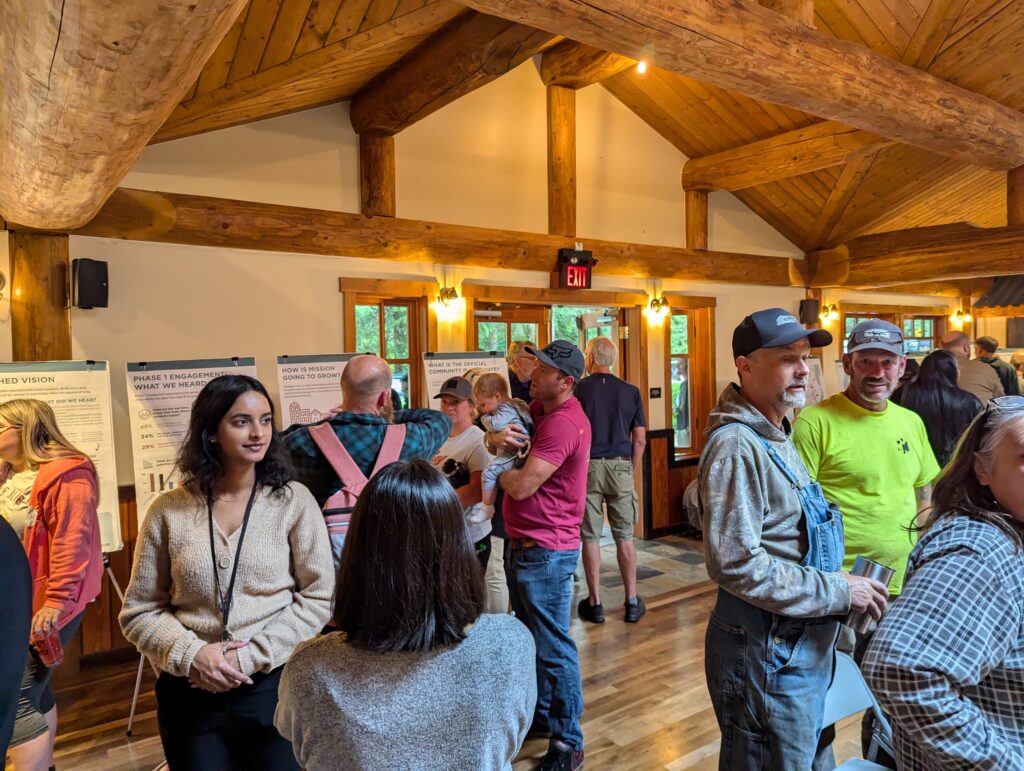
Mission’s Official Community Plan is the document that determines where and how our community will grow. Council adopted the substantially updated OCP in May 2025, following extensive public consultation, including a dedicated Rural Mission open house.
I heard the concerns raised by residents in Steelhead, Stave Falls, and other rural neighbourhoods. Rural residents were asking Council to protect the character of their communities, concentrate most future growth where municipal infrastructure exists and consider the cumulative effect that development can have on wells, roads, streams, forests and neighbouring properties.
The new OCP provides a stronger framework by:
- Maintaining separate Rural and Rural Residential land-use designations.
- Concentrating most new growth within the Urban Growth Boundary.
- Recognizing Rural Neighbourhood Centres while requiring development to remain sensitive to rural character.
- Creating stronger environmental-development permit areas.
- Regulating larger-scale land clearing in designated forested areas.
- Protecting streams, riparian areas, natural assets and wildlife habitat.
- Establishing the Rural Mission Strategy as an important next step in implementing the OCP.
The OCP does not settle every rural issue. What it provides is a policy foundation that allows Council to make better decisions and develop more effective regulations.
Read about Mission’s OCP adoption
A dedicated strategy for Rural Mission
One of the most important commitments arising from the OCP was the creation of a standalone Rural Mission Strategy.
The strategy recognizes that Rural Mission is a distinct and valuable part of our community. It addresses matters that cannot be properly understood through a city-wide planning document alone, including:
- Rural identity and development patterns.
- Sustainable service levels and funding.
- Rural roads, shoulders and road safety.
- Trees, streams, wetlands and natural landscapes.
- Community halls, parks, trails and gathering places.
- Dark skies and rural view corridors.
- The pace and form of rural development.
- The transition of former resource-extraction lands.
- Aquifer capacity and the cumulative effects of development.
The strategy also recommends practical changes for Council to consider, including larger contiguous developable areas, minimum separation between rural homes, changes to bare-land strata requirements, native-vegetation retention, lower impervious-surface coverage and better control over the scale and pace of subdivisions outside the Urban Growth Boundary.
This is not about freezing Rural Mission in time. It is about ensuring that change respects the people already living there and does not destroy the rural qualities that attracted people in the first place.
Read the Rural Mission Strategy
Stronger controls on soil and land clearing
Uncontrolled soil movement and land clearing can permanently alter drainage, remove tree cover, damage habitat and create risks for neighbouring properties and groundwater.
Mission’s Soil Management Bylaw provides the City with authority over the removal and deposit of soil. During this term, Council complemented that framework with a Land Clearing Management Program and new environmental development-permit areas.
Within designated forested areas, larger clearing activity now requires environmental review and a development permit. Outside the Urban Growth Boundary, the clearing threshold is generally 500 square metres in a calendar year, subject to the applicable exemptions. A qualified environmental professional may be required to identify sensitive features and recommend protection or mitigation measures.
The objective is not to prevent ordinary rural property maintenance. It is to give the City tools to intervene when large-scale clearing or land disturbance could cause lasting environmental harm.
Review Mission’s Land Clearing Management Program
Review Mission’s Soil Management Bylaw
Standing up for rural drinking water
For many residents of Rural Mission, a private well is their only source of drinking water. If that supply is depleted or contaminated, connecting to the municipal water system may not be available—and replacing what was lost can be extraordinarily difficult and expensive.
That is why, on June 1, 2026, I brought forward a notice of motion asking Council to investigate the feasibility of creating an Aquifer Protection Development Permit Area. Council approved the motion.
My motion directed staff to examine:
- Every provincially designated aquifer within Mission.
- Aquifer locations, recharge areas, vulnerability and development pressures.
- Whether Mission’s existing OCP and bylaws provide adequate protection.
- Aquifer-protection systems already used by other BC municipalities.
- Consultation with the Province, Fraser Health and other regulatory agencies.
- When a hydrogeological assessment should be required from a developer.
- What activities should trigger an aquifer-protection permit.
- How Mission’s aquifers can be recognized as natural community infrastructure.
That last point is especially important.
Water is infrastructure
In urban Mission, development depends upon pipes, pumps, reservoirs and treatment systems. In much of Rural Mission, the infrastructure delivering drinking water is the aquifer beneath the ground.
Aquifers also support stream flows, filter water, absorb rainfall and sustain the surrounding ecosystem. Those are real public services, even if they are provided by nature rather than concrete and steel.
I believe Mission must begin treating rural water accordingly.
Before development that could materially affect a vulnerable aquifer is approved, the City should be able to require credible professional evidence showing that:
- Existing wells will be protected.
- Sufficient water is available over the long term.
- The proposed use will not create an unacceptable cumulative drawdown.
- Contamination risks have been identified and mitigated.
- Aquifer recharge areas and connected waterways are protected.
- Responsibility is clearly established if monitoring identifies a problem.
The Province regulates groundwater and holds much of the technical information Mission needs. The City cannot replace provincial authority. But we can use our control over land use, development permits, subdivision design, clearing and soil movement—and we can demand stronger provincial study and oversight.
Review the June 1, 2026 aquifer-protection motion
My commitment for the next term
The plans are now in place. The next Council must follow through.
If re-elected, I will work to:
- Complete the technical work needed for an Aquifer Protection Development Permit Area.
- Require appropriate hydrogeological evidence where development could affect groundwater.
- Press the Province for comprehensive aquifer-capacity and vulnerability studies.
- Implement the Rural Mission Strategy through zoning and subdivision changes.
- Consider the cumulative impact of development—not only one application at a time.
- Maintain strong land-clearing, soil-management and environmental protections.
- Keep most growth within areas that have the infrastructure to support it.
- Improve rural roads, safety, recreation and community amenities in a financially sustainable way.
- Continue listening directly to rural residents as these policies are implemented.
Rural residents should not have to choose between reasonable property rights and confidence in their drinking water. Growth must be responsible, supported by evidence and appropriate for the land on which it is proposed.
Rural Mission is a choice worth protecting. I am proud of the foundation we built this term, proud to have brought aquifer protection directly before Council, and committed to finishing the work.